EDI starts out simple for many manufacturers. A few trading partners. A few document types. One person on the team who “kind of owns it.” Then, things grow.
New customer requirements come in, ERP workflows get messy, errors start slowing down orders, shipments, and invoicing. And suddenly, what was supposed to be a back-end process becomes a daily operational headache.
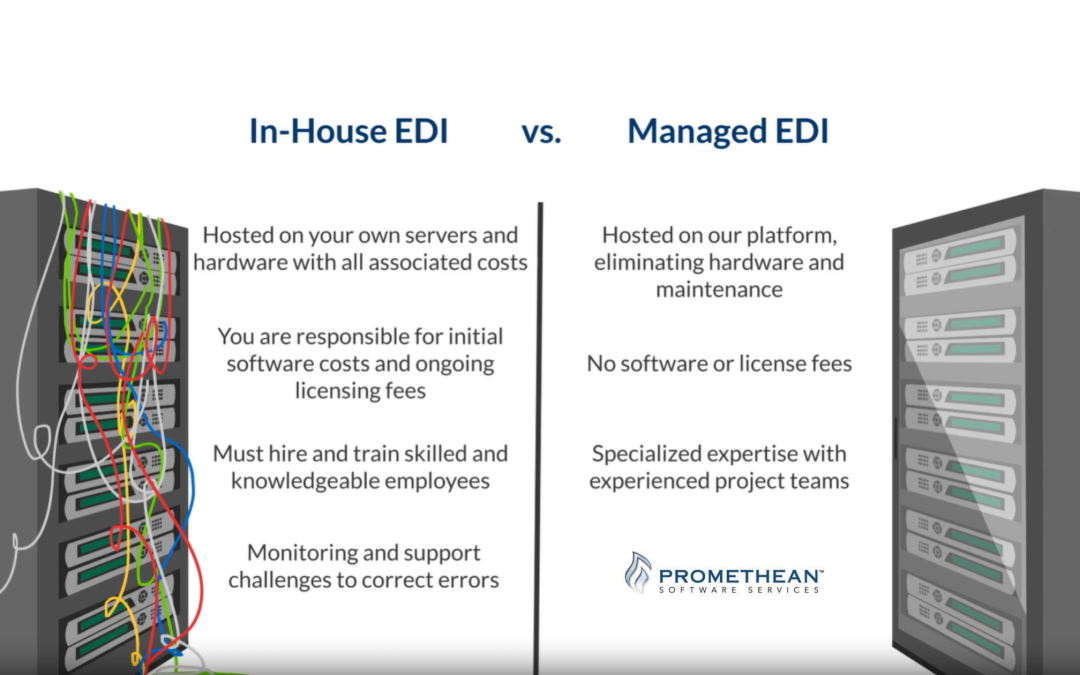
On paper, managing EDI in-house can seem like the most affordable option. The reality is, cost is often much higher than companies expect.
Table of Contents
1. Internal EDI support takes more time than most teams plan for
EDI is rarely a “set it and forget it” function.
Even after implementation, someone still must manage:
- map changes
- testing
- failed transactions
- trading partner updates
- onboarding
- support tickets
- exceptions and manual fixes
These tasks usually land on internal IT, operations, or one person who became the unofficial EDI expert over time.
The problem is simple: when EDI depends too heavily on one internal resource, it creates risk. If that person is overloaded, out of office, or no longer with the company, delays happen fast.
2. Trading partner requirements are always changing
One of the biggest hidden costs of in-house EDI is maintenance.
Customers, suppliers, and retailers regularly update their EDI requirements. New documents continue to be added. Existing maps change. Testing requirements shift.
Every change takes time.
What looks like “just one new trading partner” can quickly turn into weeks of setup, troubleshooting, and back-and-forth communication.
For growing manufacturers, that creates a bottleneck that can slow down revenue, fulfillment, and customer onboarding
3. ERP gaps often create manual workarounds
Many EDI problems are not really EDI problems. These problems are most often workflow problems between systems. When EDI and ERP processes are not aligned, teams often end up relying on:
- spreadsheets
- email approvals
- CSV imports
- rekeying data
- manual order corrections
That extra work adds labor, increases errors, and makes it harder to scale.
The real cost of EDI is often not just the transaction itself; it’s everything your team must do around it.
4. Lack of visibility makes small issues expensive
Many manufacturers do not know there is an EDI issue until something has already gone wrong. An order has been delayed, an ASN fails, an invoice never lands, a customer reaches out first. Without clear visibility into transaction flow, teams end up reacting instead of preventing problems. That creates unnecessary fire drills and makes even small issues more expensive than they should be.
5. In-house EDI can quietly become a growth problem
What works for 5 trading partners usually does not work for 50. As transaction volume increases, so do the demands of your team. If onboarding takes too long, support is reactive, and EDI workflows are held together by manual fixes, growth starts creating friction instead of momentum. That is usually the point where companies realize they do not just need EDI. They need a more reliable and scalable way to manage it.
When it may be time to outsource EDI
Your company may have outgrown in-house EDI if:
- onboarding new partners takes too long
- your team is constantly troubleshooting issues
- EDI depends on one or two internal people
- ERP workflows require manual intervention
- you lack real-time visibility into transactions
- support delays are affecting operations
At that point, outsourcing is not just about convenience.
It is about reducing operational drag and giving your team room to focus on higher-value work.
Final Thought
In-house EDI is not always the wrong choice. But for many manufacturers, it becomes more expensive, more fragile, and harder to manage over time than expected.
If your team is spending too much time maintaining EDI instead of benefiting from it, it may be time to rethink the model.
Promethean helps manufacturers simplify EDI, improve visibility, and reduce the internal burden that often comes with managing it alone.
Comparison Table of Different EDI Types
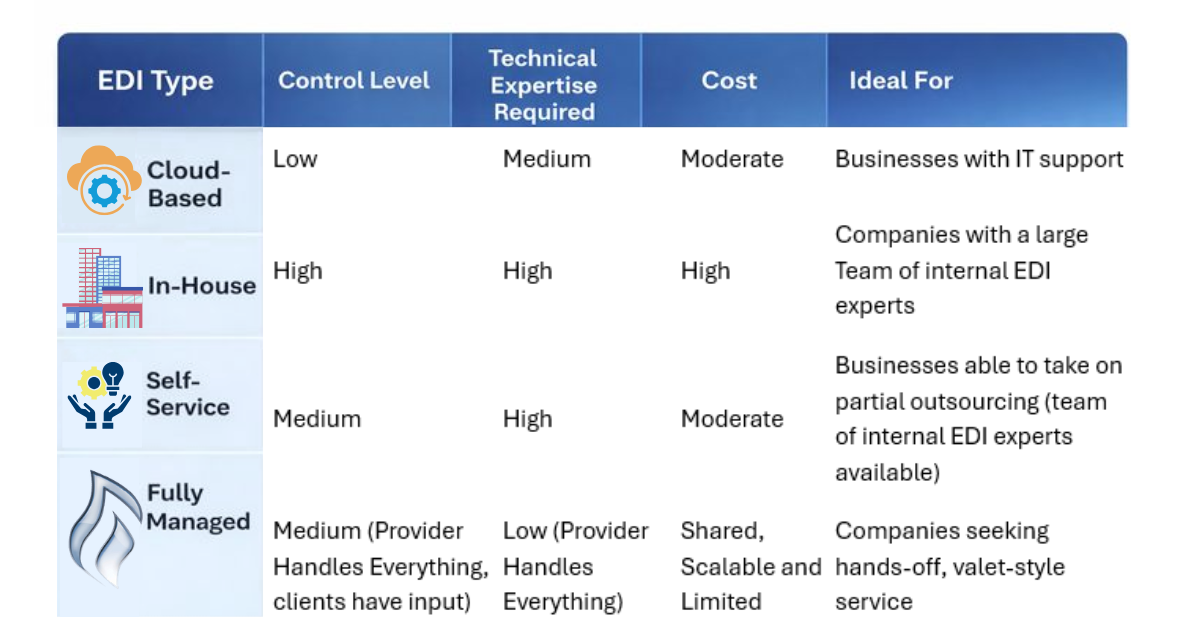
The fully managed EDI model at Promethean Software Services ensures that your organization receives top-tier service without the headaches of the other EDI types.